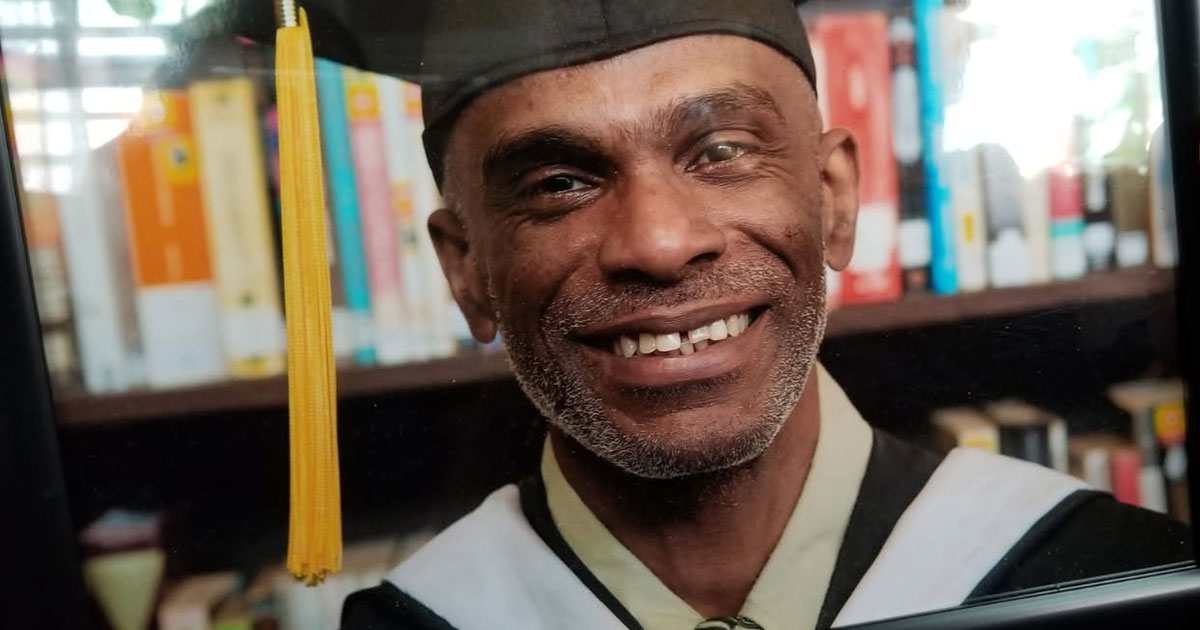

Meet Godfrey Wade.
A Jamaican-born man who spent more than 50 years living in the United States, served in the American military, raised a family, and built a life in Georgia.
But after more than five decades in the country he considered home, Godfrey found himself detained by immigration authorities and eventually deported to Jamaica.
And what makes this story particularly troubling is that everything reportedly started with a routine traffic stop.
Even more surprising, his family and lawyers say the deportation was connected to criminal convictions dating back almost 20 years and an immigration hearing he never knew he was supposed to attend.
But here’s where the story takes another unexpected turn.
A court in Georgia has now overturned one of those old convictions, raising fresh questions about what happened to this Jamaican American veteran.
So how did a man who once served in the United States Army end up being deported from the very country he had sworn to defend?
Well, let’s go back to where it all started.
Godfrey Wade was born in Jamaica and migrated legally to the United States in 1975, when he was just a teenager.
Like many Jamaican families who moved overseas during that time, America represented an opportunity to build a better future.
And for Godfrey, that future would eventually include serving his adopted country in uniform.
During the 1980s, he enlisted in the United States Army and served four years on active duty, including approximately three years overseas in Germany during the Cold War.
He was a member of the Army’s 7th Infantry Division and was eventually honorably discharged.
For Godfrey, military service wasn’t just another job. It was something he took tremendous pride in.
After leaving the Army, he settled into civilian life in Georgia, where he worked in several different professions, including as a chef, tennis coach, and fashion designer.
He raised a family, becoming a father of six children and a grandfather.
His fiancée, April Watkins, described the life they had built together as something special.
And by September 2025, Godfrey had spent approximately half a century living in America.
But then came the traffic stop that would change everything.
According to reports, Godfrey was driving through Conyers, Georgia, when police pulled him over for allegedly failing to use his turn signal.
Officers discovered that he did not have a valid driver’s licence.
Now, ordinarily, someone might expect a traffic citation or another penalty under state law.
But for Godfrey, this traffic stop uncovered a much bigger legal problem.
Authorities discovered that an immigration judge had ordered him deported more than a decade earlier.
And Godfrey says he never received proper notice of the hearing that resulted in that order.
You see, his immigration troubles actually dated back to two criminal cases from almost 20 years earlier.
One involved a bounced cheque connected to vehicle registration fees, while the other involved a simple assault charge.
His lawyer maintains that the cheque had been repaid and the related fines resolved.
Nevertheless, immigration proceedings were initiated against Godfrey, and in 2014, an immigration judge ordered him removed after he failed to appear at a scheduled hearing.
But according to court documents examined by journalists, notices associated with that hearing had been sent to an incorrect address, with some mail returned as undeliverable.
Godfrey’s legal team argues that he was never properly informed of the hearing and therefore never had a fair opportunity to defend himself.
And that old deportation order was exactly what immigration authorities used when he was arrested in 2025.
Instead of simply returning home after the traffic stop, Godfrey was taken into immigration custody.
He would spend nearly five months detained as his lawyers tried to challenge his removal.
Imagine what that must have felt like.
A man in his sixties, who had lived in America since he was a teenager, suddenly separated from his family and facing deportation to a country he had not called home for decades.
His children were devastated.
His fiancée was struggling with the separation.
And his lawyers were desperately trying to secure another opportunity for his case to be heard.
The family even appealed to elected officials for assistance.
Congressman David Scott requested that the Department of Homeland Security delay Godfrey’s deportation so his legal case could proceed.
But despite those efforts, the deportation went ahead.
On February 5, 2026, Godfrey Wade was sent back to Jamaica.
And just like that, the life he had built in America over more than 50 years was suddenly out of reach.
His children, grandchildren, fiancée, and everything he had worked for remained thousands of miles away.
Now, although Godfrey was born in Jamaica, returning to the island after so many years was not easy.
According to interviews he gave after his deportation, he had to begin rebuilding his life almost from scratch.
He initially stayed in Kingston before moving to another part of the island, where he was trying to find more permanent accommodation.
His attorney explained that extended family members had been able to provide some assistance.
But the emotional impact of being separated from his immediate family remained significant.
And Godfrey wasn’t simply fighting to return to America because he missed the life he once had.
He was fighting for what he believed was his right to have his immigration case properly heard.
Now, to be fair, the United States government has defended its handling of his immigration case.
The Department of Homeland Security pointed to his criminal history, including assault-related offences, deposit-account fraud, and other encounters with law enforcement.
Officials also maintained that a judge had ordered his removal after he failed to appear for an immigration hearing.
But Godfrey’s attorneys argue that the circumstances surrounding that missed hearing are exactly why the deportation should be reconsidered.
Because if someone never receives proper notice of a court hearing, how can they be expected to attend?
And that’s the question at the centre of this case.
But now, months after Godfrey was deported, there has been another major development.
In early October 2026, a Georgia court set aside the old misdemeanor conviction involving the bounced cheque.
The Superior Court of Douglas County granted a petition challenging the conviction, effectively returning that criminal case to the position it was in before Godfrey entered his guilty plea.
This does not automatically mean that Godfrey can return to the United States.
His immigration case still requires further legal proceedings, and the other issues in his criminal record have not simply disappeared.
However, the ruling represents an important development in his legal battle.
His attorneys are continuing to push for an opportunity to challenge the deportation order and have his circumstances considered by an immigration judge.
And for his family, the hope remains that one day Godfrey will be able to return to the people he left behind.
Now, this story raises some difficult questions.
Godfrey Wade wasn’t an American citizen. He was a lawful permanent resident, and under American immigration law, permanent residents can face deportation for certain criminal convictions.
His military service did not automatically make him a citizen or exempt him from immigration enforcement.
But there is also the question of whether he received proper notice and a fair opportunity to challenge the proceedings against him.
After all, this was a man who entered America legally, served four years in its military, and spent more than five decades building a life there.
And now, in his sixties, he is living in Jamaica while his family continues fighting for his return.
So here’s what I want to ask everyone watching.
Should a Jamaican-born military veteran who spent more than 50 years in America be deported over old criminal convictions, especially when there are questions about whether he received proper notice of his immigration hearing?
And do you believe serving in the American military should carry additional weight when immigration authorities are deciding whether someone should be deported?
I would love to hear your thoughts in the comment section.
My name is Mike, reporting for Jamaica Digest.
If you appreciate stories about Jamaicans at home and abroad, please give this video a thumbs up, share it with your friends and family, and subscribe to help us continue growing this community.
For more stories and updates, visit JaRadio.com.
Until next time, stay safe, and thanks for watching.