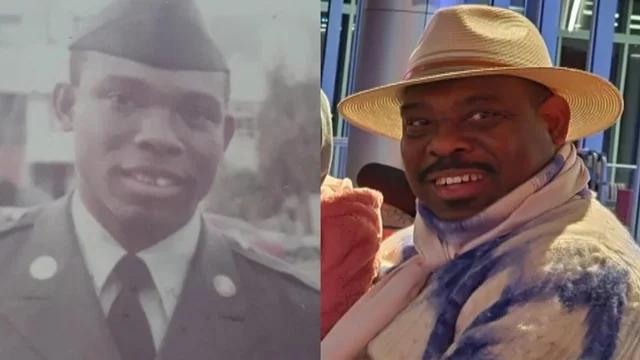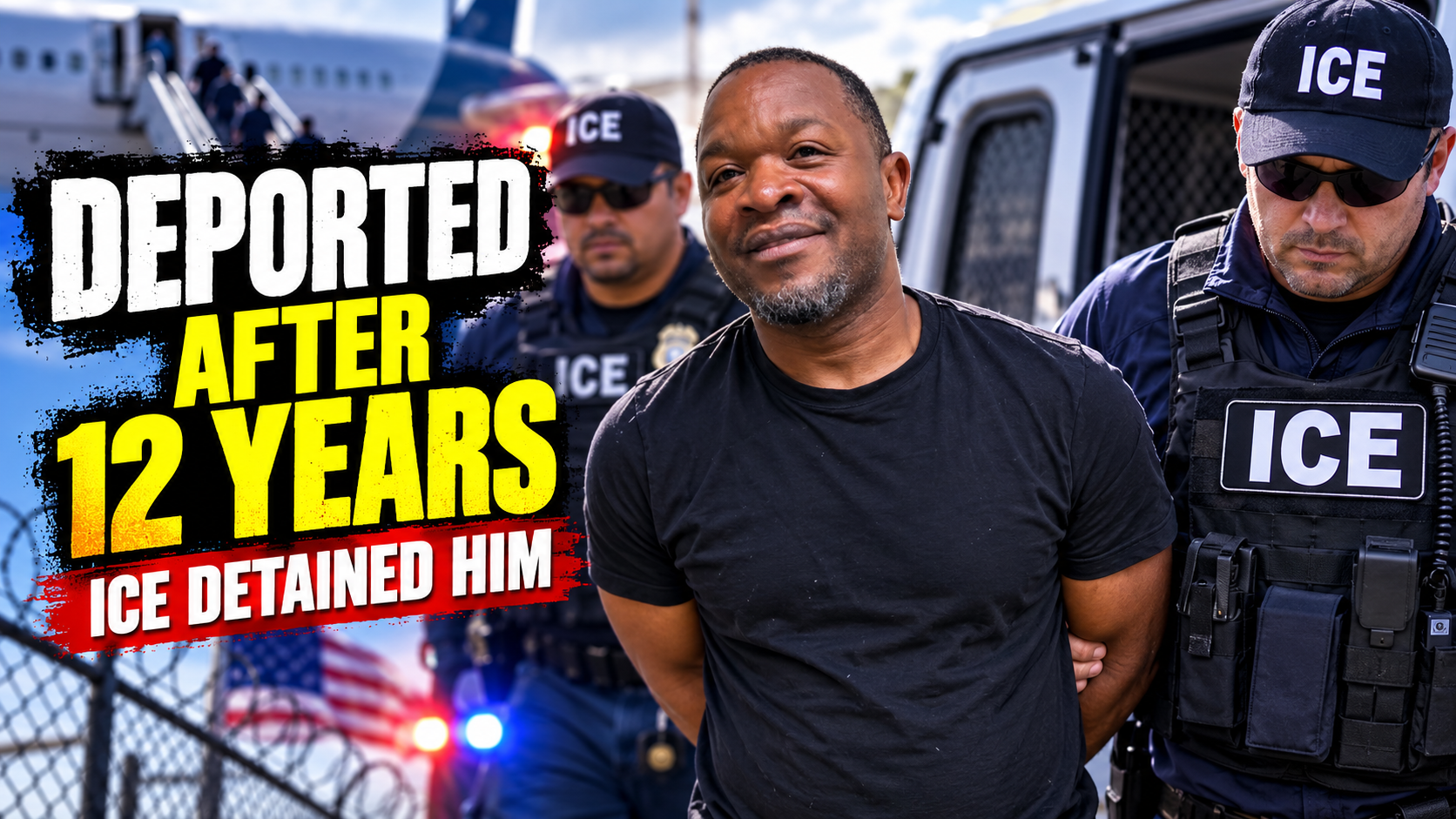

Imagine living in the United States for most of your life, raising your children, building a career, and believing that America is your home.
Then, after spending years behind bars, you’re deported to Jamaica.
You arrive at the airport with no house to go to, no family waiting to collect you, and the one friend who promised to help you never shows up.
This is the heartbreaking reality of a Jamaican man identified only as John, whose story was highlighted by The Jamaica Star in January 2026.
And what makes this story particularly troubling is that John is not asking for luxury. He simply wants a chance to rebuild his life.
But how do you start over when almost everything you once knew is gone?
John was born in Trelawny, Jamaica, but migrated to the United States when he was just 12 years old.
He settled in New York, where he spent much of his adult life working and raising a family.
For more than a decade, John worked as a truck driver. He eventually became the father of four children, three daughters and a son.
According to John, life wasn’t perfect, but things were going reasonably well.
He worked, supported his children, and believed he was doing his best as a father.
But everything began falling apart in 2013.
At approximately 50 years old, John was arrested and eventually imprisoned.
He did not disclose the specific charges that led to his incarceration, but he claimed that someone he trusted had betrayed him.
And according to John, prison changed him completely.
He became withdrawn, struggled to trust people, and began isolating himself from others.
But perhaps the most painful experience came when his mother passed away while he was incarcerated.
John recalled being able to visit her bedside, but by that time, she was already in a coma.
The final words he remembers saying to her were, “I love you.”
Imagine the pain of losing your mother while behind bars, knowing you can never get back those final moments together.
And things became even more difficult when his relationship with his children deteriorated.
John revealed that he no longer maintains contact with his three daughters or his son.
The man who once had a career, children, and a family life was now facing the possibility of losing the only country he had truly known for most of his adult life.
And when his prison sentence ended, freedom didn’t mean going home to his children.
Instead, deportation meant returning to Jamaica.
Now, this is where the story becomes even more heartbreaking.
John explained that before arriving in Jamaica, a friend had promised to meet him at the airport and help him get settled.
That promise gave him something to hold on to.
Because remember, this was a man returning to a country he had left as a child.
He had no stable home waiting for him and very little family support.
But when the aircraft landed, the friend was nowhere to be found.
John waited, expecting the person who promised to help him to appear.
But that never happened.
He told The Jamaica Star that immigration officials eventually had to contact a homeless shelter to arrange somewhere for him to go.
Just imagine that situation.
You’ve been deported from America, you’re standing in an airport in Jamaica, and the person you believed you could depend on has completely disappeared.
No one is waiting with open arms.
No family gathering.
No welcome-home celebration.
Just the painful realization that you’re on your own.
And instead of beginning a new chapter in a family home, John found himself living in a shelter in Kingston.
When The Jamaica Star spoke to him at the beginning of 2026, he was among several homeless people who attended a New Year’s Day food distribution organized by the Kingston and St Andrew Municipal Corporation.
While many Jamaicans were celebrating the beginning of another year, John admitted that he wasn’t particularly excited about 2026.
For him, the new year meant waking up to the same uncertainty.
He had nowhere permanent to call home.
His children were absent from his life.
His mother was gone.
And the country where he had spent most of his adult life was now behind him.
However, despite everything John has experienced, there is still a small piece of hope in his story.
He revealed that he had managed to find employment.
And although the job hadn’t solved his housing problems, it gave him something meaningful to do each day.
He was grateful to be working again.
But the reality remained that after finishing work, he still had to return to the shelter.
John also revealed that the only relative he maintained some contact with was his brother, who is deaf. Their communication was limited, mainly consisting of occasional text messages.
And that raises an important question.
When someone has spent decades living overseas, what exactly are they returning home to when they’re deported?
Because Jamaica might be the country printed on their birth certificate, but that doesn’t necessarily mean they still have somewhere to live, people to depend on, or opportunities waiting for them.
Now, we must also acknowledge that John was imprisoned in the United States.
He did not reveal the details of his conviction, so we cannot make assumptions about the circumstances of his case.
But regardless of what someone has done in the past, there is still a serious conversation to be had about rehabilitation and reintegration.
When a Jamaican national is deported after decades overseas, should there be more structured support to help that person find accommodation, obtain employment, and reintegrate into society?
Or should returning nationals be expected to figure everything out on their own?
In John’s case, the shelter provided an immediate place to stay, and finding a job was an important step forward.
But the struggle to secure permanent housing continued.
He still dreams of renovating his family’s old property in Trelawny, which has fallen into disrepair over the years.
He also hopes that one day, he might be able to own a home in Kingston.
These aren’t extravagant dreams.
He simply wants somewhere he can close the door at night and call his own.
And perhaps that is the most heartbreaking part of this entire story.
John spent years working and raising children in America, but after imprisonment and deportation, he found himself starting over in Jamaica without the support network he once had.
His story is also a reminder that the consequences of deportation don’t end when someone steps off an airplane.
For some people, that’s when the hardest chapter begins.
So here’s the question I want to leave with our viewers.
Should Jamaica be doing more to help deported nationals reintegrate into society, especially those who have spent almost their entire lives overseas?
And what responsibility, if any, should the countries deporting these individuals have in ensuring they don’t end up homeless?
Because today it is John.
Tomorrow it could be another Jamaican who left the island as a child, built an entire life abroad, and returned decades later to discover that the Jamaica they once knew no longer exists.
Let us know what you think in the comments.
Do you believe people like John deserve a second chance and assistance getting back on their feet, or should they be responsible for rebuilding their own lives?
Share your thoughts respectfully.
For more Jamaican news, diaspora stories, and updates on the issues affecting Jamaicans around the world, visit jaradio.com.
And remember to follow Jamaica Digest and share this story so more people can join the conversation.